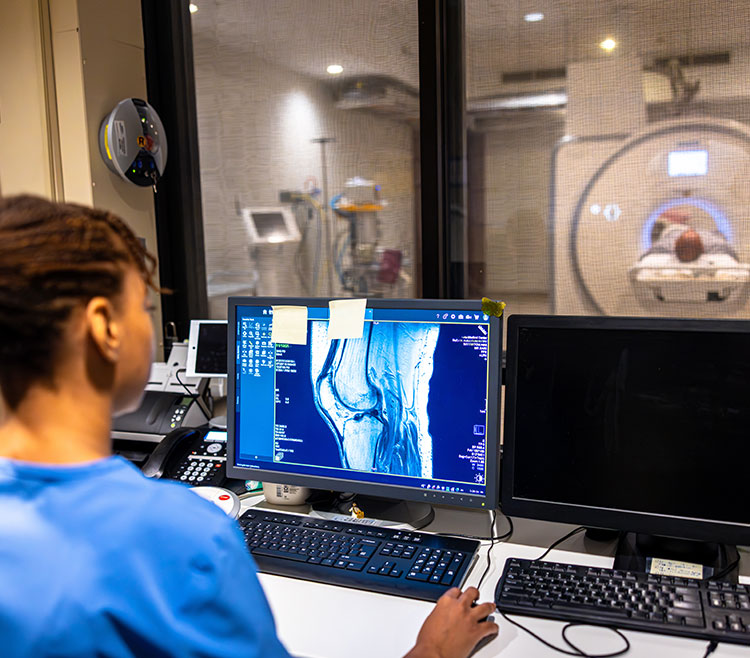
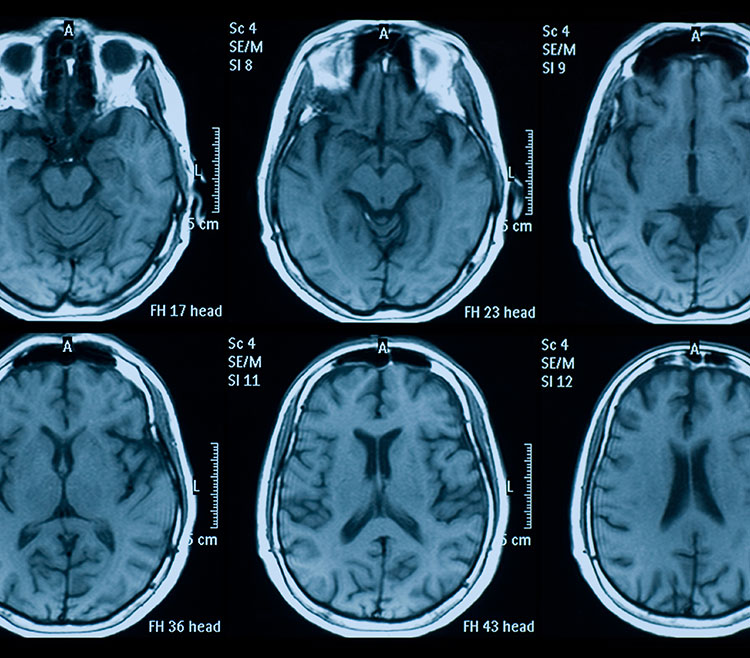
Magnetic resonance imaging (MRI) technologists use advanced imaging technology to produce images that help physicians diagnose injuries, diseases, and other medical conditions. ACC’s Associate of Occupational Science in Magnetic Resonance Imaging program is designed to provide the foundational knowledge and hands-on experience needed to begin a career in this specialized healthcare field.
The 20-month MRI program combines classroom learning, hands-on lab training, and supervised clinical experience. The program is offered at ACC’s Orange County campus and is delivered in a blended format — combining online coursework with in-person training.
Throughout the program, students learn MRI procedures, imaging physics, patient care, anatomy, safety protocols, and image acquisition techniques while developing the critical thinking and communication skills needed in healthcare environments.
Graduates earn an Associate of Occupational Science in Magnetic Resonance Imaging and are eligible to sit for the American Registry of Radiologic Technologists (ARRT) certification exam in MRI.
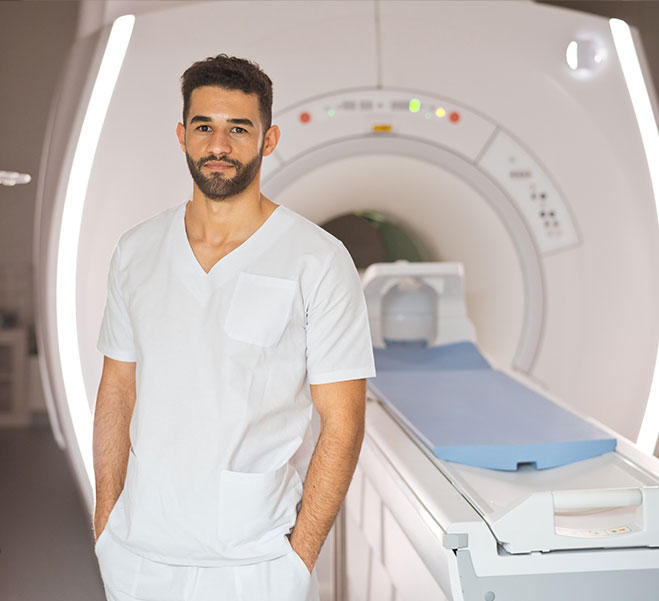
Is the Magnetic Resonance Imaging Technologist Training Program Right for you?
Learn imaging parameters, scanning techniques, and image acquisition procedures.
Learn MRI procedures and protocols used to capture detailed images of anatomy and pathology.
Develop communication, patient preparation, and safety skills used in MRI environments.
Learn more about what's in store for you in the Magnetic Resonance Imaging Technologist associate of occupational science degree program. For more on magnetic resonance imaging technologist courses, visit the college catalog.
Module Number |
Title |
Theory Hours |
Skill Lab Hours |
Clinical Hours |
Total Hours |
Quarter Credits |
|---|---|---|---|---|---|---|
| + HRA100 | Healthcare Regulatory Compliance and Accreditation † | 40 | 0 | 0 | 40 | 4.0 |
This course explores compliance programs in a hospital setting and at the local, state, and federal levels. Students will analyze case studies, engage in problem-based learning activities, and gain an understanding of internal and external audits to design an effective compliance program and effectively correct issues of noncompliance. | ||||||
| + PATH100 | Pathophysiology † | 40 | 0 | 0 | 40 | 4.0 |
This course provides a comprehensive approach to diseases based on physiological concepts. Students will learn to differentiate acute versus chronic compensatory mechanisms in response to disturbances of homeostasis in major body systems, both physical and chemical stressors. | ||||||
| + ENGL200 | College Composition II † | 40 | 0 | 0 | 40 | 4.0 |
The course conducts intensive study and practice of advanced writing principles for research papers and a detailed review of APA Style and library research. The focus is on the development of critical thinking skills needed to analyze and critique written communication. A review of writing principles includes developing thesis statements, providing support, formatting proper citation and reference pages, and creating clear organization of main points. APA Style and library usage and research are required. | ||||||
Totals |
120 |
0 |
0 |
120 |
12.0 |
|
Module Number |
Title |
Theory Hours |
Skill Lab Hours |
Clinical Hours |
Total Hours |
Quarter Credits |
|---|---|---|---|---|---|---|
| + LEH200 | Leadership in Healthcare † | 40 | 0 | 0 | 40 | 4.0 |
This course analyzes leadership theories, models, and concepts by emphasizing applications to the healthcare industry. The focus is on evaluating the essential attributes required of a leader in today’s healthcare organization and exploring topics such as ethics, integrity, servant leadership, emotional intelligence, conflict management, and team values. | ||||||
| + HPS200 | Healthcare Payment Systems † | 40 | 0 | 0 | 40 | 4.0 |
This course evaluates current trends and traditional methods of payment and reimbursement in the healthcare industry. The fundamentals and terminology of different payer systems in healthcare are covered. Students will analyze third-party payer requirements, Medicare’s payment systems, healthcare providers role, and revenue cycles. | ||||||
| + RD200 | Advanced Cross-Sectional Anatomy † | 40 | 0 | 0 | 40 | 4.0 |
This course is designed to expand knowledge and skills in the theory of Cross-Sectional Anatomy. Students will advance their understanding of the specialized study of cross-sectional anatomy as it relates to the sectional imaging modalities of Computed Tomography (CT) and/or Magnetic Resonance Imaging (MRI). The course will prepare the student to become a competent entry level CT and/or MRI Technologist. | ||||||
Totals |
120 |
0 |
0 |
120 |
12.0 |
|
Module Number |
Title |
Theory Hours |
Skill Lab Hours |
Clinical Hours |
Total Hours |
Quarter Credits |
|---|---|---|---|---|---|---|
| + RD300 | CT Applications † | 40 | 0 | 0 | 40 | 4.0 |
This course is designed to expand knowledge and skills in the theory and practice of Computed Tomography (CT). Students will learn and develop competence in patient care, communication skills, critical thinking, and technical skills as they relate to CT. The course will prepare the student to take the certification exam for CT and to become a competent entry level CT Technologist. | ||||||
| + HMG300 | Introduction to Healthcare Management † | 40 | 0 | 0 | 40 | 4.0 |
This course evaluates healthcare management within a variety of health organization settings such ashospitals, nursing homes, and outpatient clinics. This course introduces topics in ethics, leadership,organizational behavior, information technology, healthcare fi nancing, health disparities, teamwork,reemerging outbreaks, bioterrorism, violence in healthcare settings, and medical tourism. | ||||||
| + HRM300 | Research Methods in Healthcare † | 40 | 0 | 0 | 40 | 4.0 |
This course explores research in health care with an emphasis on tools to make informed decisions for patients and the healthcare sciences. Students will examine ethical considerations, evaluate the research process, analyze qualitative, quantitative, and mixed research methods; determine the reliability and validity of questionnaires, explore descriptive and comparative statistics, and statistical modeling. | ||||||
Totals |
120 |
0 |
0 |
120 |
12.0 |
|
Module Number |
Title |
Theory Hours |
Skill Lab Hours |
Clinical Hours |
Total Hours |
Quarter Credits |
|---|---|---|---|---|---|---|
| + RD400 | MRI Applications † | 40 | 0 | 0 | 40 | 4.0 |
This course provides the student with an understanding of the applied physics and techniques used in Magnetic Resonance Imaging (MRI) procedures. The content includes instrumentation, method of image formation, pulse sequences, sources of image artifacts, diffusion, and perfusion. The course will prepare the student to become a competent entry level MRI technologist. | ||||||
| + HUM400 | Cultural Diversity † | 40 | 0 | 0 | 40 | 4.0 |
This course compares varied cultural traditions among groups of people in each society who are simultaneously interdependent and autonomous. The emphasis is on shared socioeconomic and political systems of people in a society and an appreciation of the distinct cultural practices among groups who coexist within that society. Diversity of race, ethnicity, gender, socioeconomic status, disability, religion, and sexual orientation are studies. Effective communication and conflict resolution are a focus throughout the course. | ||||||
| + BIOS400 | Biostatistics † | 40 | 0 | 0 | 40 | 4.0 |
This course is designed to familiarize students with the concepts, methods, and tools of health data collection, use, and analysis to include why evidence-based approaches are an essential part of health data collection. | ||||||
Totals |
120 |
0 |
0 |
120 |
12.0 |
|
Module Number |
Title |
Theory Hours |
Skill Lab Hours |
Clinical Hours |
Total Hours |
Quarter Credits |
|---|---|---|---|---|---|---|
| + HLE500 | Applied Law & Ethics † | 40 | 0 | 0 | 40 | 4.0 |
This course introduces biomedical and health care ethics. Topics to be explored include a wide range of subjects such as research involving humans and animals, human genetics, reproduction, death and dying, organ transplantation, public health, biotechnology, and bioscience. It will help students understand how health care professionals and consumers make difficult health care choices for their patients, loved ones, and themselves. | ||||||
| + CAP A | Capstone Course A † | 40 | 0 | 0 | 40 | 4.0 |
Opportunities in and Beyond Radiography is designed to deepen students' knowledge of opportunities for career advancement. Students will explore various radiographic imaging specialties, healthcare organizational structure, research strategies, leadership roles, and more. This exploration serves as the groundwork for selecting a specific area for in-depth research culminating in a detailed 10–12-pageresearch paper. The research done will lay the foundation for a subsequent project in Capstone B, where the concepts will be applied in a multimedia project. This course is structured to foster critical thinking, encourage independent research, and develop comprehensive knowledge in the focused area of choice. | ||||||
| + | † | 0 | 0 | 0 | 0 | 0.0 |
Totals |
80 |
0 |
0 |
80 |
8.0 |
|
Module Number |
Title |
Theory Hours |
Skill Lab Hours |
Clinical Hours |
Total Hours |
Quarter Credits |
|---|---|---|---|---|---|---|
| + RD600 | Advanced Imaging Pathology † | 40 | 0 | 0 | 40 | 4.0 |
This course is designed to expand knowledge and skills in the theory of Imaging Pathology. Students will advance their understanding of pathology as it relates to the sectional imaging specialties of Computed Tomography (CT) and/or Magnetic Resonance Imaging (MRI). The course will prepare the student to become a competent entry level CT and/or MRI technologist. | ||||||
| + PSYC200 | Emotional Intelligence † | 40 | 0 | 0 | 40 | 4.0 |
The course identifies personal emotional intelligence (EQ) skills which can be developed into strengths; analyzes strategies to calculate and improve EQ by exploring what factors trigger EQ scores; explores self-awareness strategies, self-management strategies, relationship management strategies, and social awareness strategies. | ||||||
| + CAPB | Capstone Course B † | 40 | 0 | 0 | 40 | 4.0 |
Capstone B: Advanced Applications and Innovations in Radiography is an immersive, project-based course designed to build upon the foundational knowledge acquired in Capstone A. This course challenges students to apply their skills in real-life scenarios and grow within the healthcare profession. Students will engage in one of four project options, each tailored to develop specific skills such as enhanced communication, cultural competency, leadership, and advanced technical proficiency. This course is structured to foster critical thinking, encourage independent research, and develop comprehensive knowledge and skills in the focused area of choice. | ||||||
Totals |
120 |
0 |
0 |
120 |
12.0 |
|
Module Number |
Title |
Theory Hours |
Skill Lab Hours |
Clinical Hours |
Total Hours |
Quarter Credits |
|---|---|---|---|---|---|---|
| + TCCORE BSRS | Transfer Credits Core † | 0 | 0 | 0 | 0 | 106.0 |
Transfer Credits Core | ||||||
| + TCGE BSRS | Transfer Credits General Education † | 0 | 0 | 0 | 0 | 16.0 |
Transfer Credits General Education | ||||||
Totals |
0 |
0 |
0 |
0 |
122.0 |
|
| + Module Number: HRA100 (View Description) | |
|---|---|
This course explores compliance programs in a hospital setting and at the local, state, and federal levels. Students will analyze case studies, engage in problem-based learning activities, and gain an understanding of internal and external audits to design an effective compliance program and effectively correct issues of noncompliance. | |
| Title | Healthcare Regulatory Compliance and Accreditation † |
| Theory Hours | 40 |
| Skill Lab Hours | 0 |
| Clinical Hours | 0 |
| Total Hours | 40 |
| Quarter Credits | 4.0 |
| + Module Number: PATH100 (View Description) | |
This course provides a comprehensive approach to diseases based on physiological concepts. Students will learn to differentiate acute versus chronic compensatory mechanisms in response to disturbances of homeostasis in major body systems, both physical and chemical stressors. | |
| Title | Pathophysiology † |
| Theory Hours | 40 |
| Skill Lab Hours | 0 |
| Clinical Hours | 0 |
| Total Hours | 40 |
| Quarter Credits | 4.0 |
| + Module Number: ENGL200 (View Description) | |
The course conducts intensive study and practice of advanced writing principles for research papers and a detailed review of APA Style and library research. The focus is on the development of critical thinking skills needed to analyze and critique written communication. A review of writing principles includes developing thesis statements, providing support, formatting proper citation and reference pages, and creating clear organization of main points. APA Style and library usage and research are required. | |
| Title | College Composition II † |
| Theory Hours | 40 |
| Skill Lab Hours | 0 |
| Clinical Hours | 0 |
| Total Hours | 40 |
| Quarter Credits | 4.0 |
TOTALS |
|
| Theory Hours | 120 |
| Skill Lab Hours | 0 |
| Clinical Hours | 0 |
| Total Hours< | 120 |
| Quarter Credits | 12.0 |
| + Module Number: LEH200 (View Description) | |
|---|---|
This course analyzes leadership theories, models, and concepts by emphasizing applications to the healthcare industry. The focus is on evaluating the essential attributes required of a leader in today’s healthcare organization and exploring topics such as ethics, integrity, servant leadership, emotional intelligence, conflict management, and team values. | |
| Title | Leadership in Healthcare † |
| Theory Hours | 40 |
| Skill Lab Hours | 0 |
| Clinical Hours | 0 |
| Total Hours | 40 |
| Quarter Credits | 4.0 |
| + Module Number: HPS200 (View Description) | |
This course evaluates current trends and traditional methods of payment and reimbursement in the healthcare industry. The fundamentals and terminology of different payer systems in healthcare are covered. Students will analyze third-party payer requirements, Medicare’s payment systems, healthcare providers role, and revenue cycles. | |
| Title | Healthcare Payment Systems † |
| Theory Hours | 40 |
| Skill Lab Hours | 0 |
| Clinical Hours | 0 |
| Total Hours | 40 |
| Quarter Credits | 4.0 |
| + Module Number: RD200 (View Description) | |
This course is designed to expand knowledge and skills in the theory of Cross-Sectional Anatomy. Students will advance their understanding of the specialized study of cross-sectional anatomy as it relates to the sectional imaging modalities of Computed Tomography (CT) and/or Magnetic Resonance Imaging (MRI). The course will prepare the student to become a competent entry level CT and/or MRI Technologist. | |
| Title | Advanced Cross-Sectional Anatomy † |
| Theory Hours | 40 |
| Skill Lab Hours | 0 |
| Clinical Hours | 0 |
| Total Hours | 40 |
| Quarter Credits | 4.0 |
TOTALS |
|
| Theory Hours | 120 |
| Skill Lab Hours | 0 |
| Clinical Hours | 0 |
| Total Hours< | 120 |
| Quarter Credits | 12.0 |
| + Module Number: RD300 (View Description) | |
|---|---|
This course is designed to expand knowledge and skills in the theory and practice of Computed Tomography (CT). Students will learn and develop competence in patient care, communication skills, critical thinking, and technical skills as they relate to CT. The course will prepare the student to take the certification exam for CT and to become a competent entry level CT Technologist. | |
| Title | CT Applications † |
| Theory Hours | 40 |
| Skill Lab Hours | 0 |
| Clinical Hours | 0 |
| Total Hours | 40 |
| Quarter Credits | 4.0 |
| + Module Number: HMG300 (View Description) | |
This course evaluates healthcare management within a variety of health organization settings such ashospitals, nursing homes, and outpatient clinics. This course introduces topics in ethics, leadership,organizational behavior, information technology, healthcare fi nancing, health disparities, teamwork,reemerging outbreaks, bioterrorism, violence in healthcare settings, and medical tourism. | |
| Title | Introduction to Healthcare Management † |
| Theory Hours | 40 |
| Skill Lab Hours | 0 |
| Clinical Hours | 0 |
| Total Hours | 40 |
| Quarter Credits | 4.0 |
| + Module Number: HRM300 (View Description) | |
This course explores research in health care with an emphasis on tools to make informed decisions for patients and the healthcare sciences. Students will examine ethical considerations, evaluate the research process, analyze qualitative, quantitative, and mixed research methods; determine the reliability and validity of questionnaires, explore descriptive and comparative statistics, and statistical modeling. | |
| Title | Research Methods in Healthcare † |
| Theory Hours | 40 |
| Skill Lab Hours | 0 |
| Clinical Hours | 0 |
| Total Hours | 40 |
| Quarter Credits | 4.0 |
TOTALS |
|
| Theory Hours | 120 |
| Skill Lab Hours | 0 |
| Clinical Hours | 0 |
| Total Hours< | 120 |
| Quarter Credits | 12.0 |
| + Module Number: RD400 (View Description) | |
|---|---|
This course provides the student with an understanding of the applied physics and techniques used in Magnetic Resonance Imaging (MRI) procedures. The content includes instrumentation, method of image formation, pulse sequences, sources of image artifacts, diffusion, and perfusion. The course will prepare the student to become a competent entry level MRI technologist. | |
| Title | MRI Applications † |
| Theory Hours | 40 |
| Skill Lab Hours | 0 |
| Clinical Hours | 0 |
| Total Hours | 40 |
| Quarter Credits | 4.0 |
| + Module Number: HUM400 (View Description) | |
This course compares varied cultural traditions among groups of people in each society who are simultaneously interdependent and autonomous. The emphasis is on shared socioeconomic and political systems of people in a society and an appreciation of the distinct cultural practices among groups who coexist within that society. Diversity of race, ethnicity, gender, socioeconomic status, disability, religion, and sexual orientation are studies. Effective communication and conflict resolution are a focus throughout the course. | |
| Title | Cultural Diversity † |
| Theory Hours | 40 |
| Skill Lab Hours | 0 |
| Clinical Hours | 0 |
| Total Hours | 40 |
| Quarter Credits | 4.0 |
| + Module Number: BIOS400 (View Description) | |
This course is designed to familiarize students with the concepts, methods, and tools of health data collection, use, and analysis to include why evidence-based approaches are an essential part of health data collection. | |
| Title | Biostatistics † |
| Theory Hours | 40 |
| Skill Lab Hours | 0 |
| Clinical Hours | 0 |
| Total Hours | 40 |
| Quarter Credits | 4.0 |
TOTALS |
|
| Theory Hours | 120 |
| Skill Lab Hours | 0 |
| Clinical Hours | 0 |
| Total Hours< | 120 |
| Quarter Credits | 12.0 |
| + Module Number: HLE500 (View Description) | |
|---|---|
This course introduces biomedical and health care ethics. Topics to be explored include a wide range of subjects such as research involving humans and animals, human genetics, reproduction, death and dying, organ transplantation, public health, biotechnology, and bioscience. It will help students understand how health care professionals and consumers make difficult health care choices for their patients, loved ones, and themselves. | |
| Title | Applied Law & Ethics † |
| Theory Hours | 40 |
| Skill Lab Hours | 0 |
| Clinical Hours | 0 |
| Total Hours | 40 |
| Quarter Credits | 4.0 |
| + Module Number: CAP A (View Description) | |
Opportunities in and Beyond Radiography is designed to deepen students' knowledge of opportunities for career advancement. Students will explore various radiographic imaging specialties, healthcare organizational structure, research strategies, leadership roles, and more. This exploration serves as the groundwork for selecting a specific area for in-depth research culminating in a detailed 10–12-pageresearch paper. The research done will lay the foundation for a subsequent project in Capstone B, where the concepts will be applied in a multimedia project. This course is structured to foster critical thinking, encourage independent research, and develop comprehensive knowledge in the focused area of choice. | |
| Title | Capstone Course A † |
| Theory Hours | 40 |
| Skill Lab Hours | 0 |
| Clinical Hours | 0 |
| Total Hours | 40 |
| Quarter Credits | 4.0 |
| + Module Number: (View Description) | |
| Title | † |
| Theory Hours | 0 |
| Skill Lab Hours | 0 |
| Clinical Hours | 0 |
| Total Hours | 0 |
| Quarter Credits | 0.0 |
TOTALS |
|
| Theory Hours | 80 |
| Skill Lab Hours | 0 |
| Clinical Hours | 0 |
| Total Hours< | 80 |
| Quarter Credits | 8.0 |
| + Module Number: RD600 (View Description) | |
|---|---|
This course is designed to expand knowledge and skills in the theory of Imaging Pathology. Students will advance their understanding of pathology as it relates to the sectional imaging specialties of Computed Tomography (CT) and/or Magnetic Resonance Imaging (MRI). The course will prepare the student to become a competent entry level CT and/or MRI technologist. | |
| Title | Advanced Imaging Pathology † |
| Theory Hours | 40 |
| Skill Lab Hours | 0 |
| Clinical Hours | 0 |
| Total Hours | 40 |
| Quarter Credits | 4.0 |
| + Module Number: PSYC200 (View Description) | |
The course identifies personal emotional intelligence (EQ) skills which can be developed into strengths; analyzes strategies to calculate and improve EQ by exploring what factors trigger EQ scores; explores self-awareness strategies, self-management strategies, relationship management strategies, and social awareness strategies. | |
| Title | Emotional Intelligence † |
| Theory Hours | 40 |
| Skill Lab Hours | 0 |
| Clinical Hours | 0 |
| Total Hours | 40 |
| Quarter Credits | 4.0 |
| + Module Number: CAPB (View Description) | |
Capstone B: Advanced Applications and Innovations in Radiography is an immersive, project-based course designed to build upon the foundational knowledge acquired in Capstone A. This course challenges students to apply their skills in real-life scenarios and grow within the healthcare profession. Students will engage in one of four project options, each tailored to develop specific skills such as enhanced communication, cultural competency, leadership, and advanced technical proficiency. This course is structured to foster critical thinking, encourage independent research, and develop comprehensive knowledge and skills in the focused area of choice. | |
| Title | Capstone Course B † |
| Theory Hours | 40 |
| Skill Lab Hours | 0 |
| Clinical Hours | 0 |
| Total Hours | 40 |
| Quarter Credits | 4.0 |
TOTALS |
|
| Theory Hours | 120 |
| Skill Lab Hours | 0 |
| Clinical Hours | 0 |
| Total Hours< | 120 |
| Quarter Credits | 12.0 |
| + Module Number: TCCORE BSRS (View Description) | |
|---|---|
Transfer Credits Core | |
| Title | Transfer Credits Core † |
| Theory Hours | 0 |
| Skill Lab Hours | 0 |
| Clinical Hours | 0 |
| Total Hours | 0 |
| Quarter Credits | 106.0 |
| + Module Number: TCGE BSRS (View Description) | |
Transfer Credits General Education | |
| Title | Transfer Credits General Education † |
| Theory Hours | 0 |
| Skill Lab Hours | 0 |
| Clinical Hours | 0 |
| Total Hours | 0 |
| Quarter Credits | 16.0 |
TOTALS |
|
| Theory Hours | 0 |
| Skill Lab Hours | 0 |
| Clinical Hours | 0 |
| Total Hours< | 0 |
| Quarter Credits | 122.0 |
In as little as 20 months, ACC's Associate of Occupational Science in Magnetic Resonance Imaging program is designed to prepare students to work with one of healthcare's most advanced diagnostic imaging technologies.
The curriculum combines foundational healthcare coursework with MRI-focused instruction, hands-on simulation training, and supervised clinical experience. Students learn how magnetic fields, radiofrequency pulses, and advanced imaging techniques work together to create detailed cross-sectional images used to evaluate injuries, diseases, and other medical conditions.
Key areas of study include:
Throughout the program, students build experience in MRI environments while developing the technical, analytical, and patient-care skills needed to perform imaging procedures. Clinical training provides opportunities to apply classroom knowledge while working alongside imaging professionals in healthcare settings.
The goal of the MRI program is to prepare graduates to:
Graduates receive an Associate of Occupational Science in Magnetic Resonance Imaging and are eligible to sit for the ARRT MRI certification exam.
| Highlights | ACC's Program |
Blended format (online and on campus) |
✔ |
Complete in as little as 20 months |
✔ |
Over 900 hours of real-world experience |
✔ |
On-campus labs |
✔ |
Eligibility for ARRT certification exam |
✔ |
Career services support |
✔ |
Financial aid and scholarships available for those who qualify |
✔ |
Graduate resources and alumni network |
✔ |
The Los Angeles, Anaheim, and Ontario campuses in California, along with the Dallas Fort-Worth, Texas campus, are institutionally accredited by the Accrediting Bureau of Health Education Schools (ABHES). ABHES 6116 Executive Blvd. Suite 730, North Bethesda, MD 20852; Phone (301) 291-7550 / Fax (703) 917-4109 / www.abhes.org
To enroll in the MRI Technologist program at ACC, applicants must:
For full admission criteria, review ACC’s general college admission requirements.
Want a closer look at ACC's MRI tech training program? Our brochure covers important details about the program including:
Download the brochure to explore what that ACC’s MRI Technologist program has to offer and take the next step toward your future in healthcare.
An MRI technologist operates magnetic resonance imaging equipment to create detailed images used by physicians to diagnose and monitor medical conditions.
Students can earn their associate degree in MRI technology in as little as 20 months.
ACC’s MRI tech training is delivered in a blended format. Some coursework is completed online while lab training and clinical experiences take place in person at our Orange County campus and local clinical sites.
Students learn MRI physics, anatomy, image acquisition, patient care, MRI safety, pathology, pharmacology, and scanning procedures while developing hands-on clinical skills.
Yes. The curriculum is designed to prepare students for the American Registry of Radiologic Technologists (ARRT) MRI certification exam.
Our admissions advisors and financial aid advisors are here to support you. To learn more about ACC’s MRI Technologist program cost, access our tuition info.
Financial aid and scholarships are available for those who qualify. An ACC Financial Aid Advisor can assist you in identifying options to help fund your education.
With a blended learning format and hands-on training, the MRI Technologist program helps students build the skills needed for a career in magnetic resonance imaging.
Magnetic resonance imaging technologists, or MRI techs, play an important role in helping healthcare providers and patients get the answers they need to proceed with effective healthcare. MRI technologists in California prepare patients for their imaging scans, record medical histories, conduct MRIs, and ensure that quality images are captured–all of which are necessary for proper diagnosis and assessment of patient conditions.
You brochure is now downloading...


Ontario Campus: Voted Best Career College in the 2025 Inland Valley Daily Bulletin Readers Choice Awards.

LA Campus: Voted Best Career College in the 2025 LA Daily News Readers Choice Awards.

OC Campus: Voted Best Career College in the 2025 San Gabriel Valley Tribune Readers Choice Awards.